
Order planning
Plan a Kakobuy parcel before it is packed
Use a sample parcel to understand what to measure, what to protect and when to update a delivery estimate.
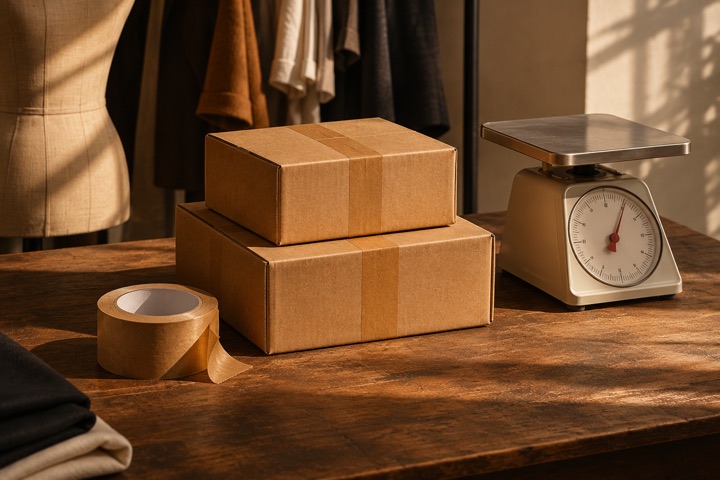
A parcel estimate becomes more useful once you know what takes up space inside the box. If a Kakobuy shortlist includes shoes, soft clothing and a structured bag, sketch the packed parcel before you compare delivery quotes.
Start with the item that sets the box size
A rigid shoe box or a bag with a fixed frame may determine the minimum carton dimensions. Estimate which soft pieces can fit beside it without pressure on buckles, trims or areas you want to protect. Write two scenarios if you are undecided about keeping a retail box. Use the outside carton dimensions in each scenario.
Record item weight and packed weight separately. On a home packing test you can weigh an empty carton and padding. For a remote parcel, mark those numbers as estimates until you have final measurements.
Check how your selected carrier quotes the parcel
A carrier may use actual weight, dimensional weight or other rules to calculate the billed amount. Confirm the rules for the specific route and service. As a worked example, if the stated divisor is 5,000 for centimetres, a 40 × 30 × 25 cm carton gives a dimensional weight of 6 kg. A 40 × 30 × 20 cm carton gives 4.8 kg under that same example rule.
If the packed carton weighs 4.2 kg, the dimensional figure may matter under a higher-of-two rule. These example numbers help you identify what to request when you obtain a real quote, including the divisor and how rounding works.
Update after packing
Ask for the final external dimensions and the measured gross weight. Then update the estimate for the same service. Consider whether the smaller carton still meets the protection needs you wrote down when you started.